
individual record


id | first | middle | last | dob | dod | cod |
| 99 | George | Nelson | Huckins | 2/16/1834 | 4/2/1862 | Fever |
veteran | exhumed | purchaser | cemetery |
| TRUE | FALSE | Adams Street |
lot | plot | ||||||||||||||||||||||
| R18 G2 |
relations |
| Noah A. Huckins (brother?) |
military branch | date served | war |
| Army | 10/16/1861-4/2/1862 | Civil War |
rank | medals | unit |
| Lient. | N/A | Company E., 65th Ohio Volunteer Infantry |
military comments |
| Age 27 years at enlistment. Promoted from Sarg. to 2nd Lieut 11/15/1861. Wounded/contracted disease in war and died in a temporary hospital near Nashville Tenn. First from Berea to die in Civil War. Buried at Adams Street Cemetery Berea, Ohio. |
military sources |
| Inscriptions from the Old Berea Cemetery 1904, Berea Historical Society "Heres a List of Soldiars Dead", May 30, 1930, Berea Historical Society "Persons buried in Adams St. Cemetery", City of Berea Records "City Cemetery" small ledger copy, Berea Historical Society "The Berea Enerprise" 6/24/1932 p.1 c.1-2, p.6 c.5-6 Civil War Research Database, citing Official Roster of the Soldiers of the State ofOhio,online www.civilwardata.com |
comments |
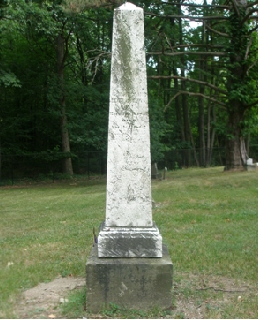
| George Nelson Huckins was born in Whithy Township, Ontaria, Canada, on 16 Feb 1834 (Alumni Record of Baldwin University, 1846-1890, p. 29). He entered the Baldwin Institute in 1854 (BI Catalogue). Baldwin Institute became Baldwin University in 1857 (Webber 173), and in that year, Huckins participated in a special debate for the Commencement exercises. The question up for discussion was whether Ireland had produced greater orators than England or America, and Huckins argued the negative (Program of the Second Commencement of Baldwin University, 17 June 1857). In 1858-59, his brother(?) Noah A. Huckins also entered BU, although he left to serve in the Civil War, returned to repeat his junior year, and apparently never graduated. Both gave their city of residence as "Brooklyn, C. W." (BU Catalogues). George Huckins graduated in 1859, with an MA (Alumni Record, 29). A collage of photographs of the BU graduating class hangs in the front room of the Baldwin-Wallace College Historian's house. There are four men and one woman. The photo in the lower right is John Baldwin Jr., son of the founder of the college. The woman must be Harriet Phelps Gee. The other three men are George Huckins, Ira Harris Pool, and Adam Clark Barnes. Harriet later married Adam. All three of the unidentified men are pale, with light eyes and hair (Baldwin University Graduating Class of 1859 photograph, BW Historian's House; Alumni Record, 28-29). The Inscriptions from the Old Village Cemetery states, "Huckins, Geo. N., Lient, Co. E., 65 O. Vol. Inf., b. Feb 16, 1834., dApr. 2, 1862." George was enumerated in the 1860 census, age 26, living in Columbia Center (Lorain County) in the household of farmer Philander Emmonds, working as a Methodist minister. The college alumni record noted that he had joined the North Ohio Conference of the Methodist Episcopal Church and was preaching at Columbia in the Diocese of Copopa. "He was a young man of remarkable power and influence for good. When word came to the Canadian home that George had entered the ministry, his mother exclaimed, "Praise God! He will do some good saving souls" (Alumni Record of Baldwin University). The Cuyahoga County Cemetery Inscriptions state, "G.N. Huckins, Leut Co E, 65 O.V.I born Feb 16, 1834 died Apr 2, 1862." He also wrote a diary that covers the last year of his time at Baldwin University. The diary is alternately joyful and dark. He rejoiced at sunny weather but castigated himself for sin. He related in veiled language his relationships with women, his desire for marriage, and his struggles with his studies. He also told of his feelings of hypocrisy at saving souls on deathbeds while he harbored doubts about his faith, his concern as to whether he should continue to serve as a minister, his hatred for slavery and shock at the results of the John Brown rebellion, and his increasing restlessness and desire to make something of himself. Among many notable comments, he also said this: "the sin of slavery must be washed from the garments of the nation, if necessary with blood." He noted that his brother has joined the army, and wished that he too could do something useful (Diary). He enlisted in the Union Army at Berea on 16 Oct 1861 as a sergeant, in Co. E, 65th Ohio Volunteer Infantry, for a three year term. His age was given as 27, height 5'10", complexion light, eyes blue, hair light, born in Canada, occupation minister. He was promoted to 2nd Lieutenant on 7 Nov. 1861. He died 2 April 1862 at age 28 near Nashville TN, of typhoid fever, in a temporary hospital. His death was certified by Capt. H.A. Whitlock. His effects were "taken by his friends" (Huckins Casualty Sheet and muster records). He was the first Berean to die in the Civil War. The college "Monument Association" bought his grave marker, and lot 80. BU students used to decorate his grave every year on Decoration Day, now known as Memorial Day ("Historical Notes"; "Number of burial lots"). An undated photograph from the Berea Historical Society Civil War file shows a WWII soldier saluting Huckins's decorated grave on Armistice Day. Schoolmates wrote reminiscences about George to the Berea Advertiser, 17 September 1886 & 1 October 1886: "Reminiscences of Baldwin University Students. Mrs. Lura G. Baldwin While visiting in Walktham, Mass., this summer I went one evening to prayer meeting. The minister related his experience, stating that a young man was sent to preach on the Brecksville circuit in Northern Ohio, and telling the particulars of his own conversion through the influence of Geo. N. Huckins. After the service I spoke with him and found that he was a graduate of Baldwin University—J.M. Avann." "Reminiscences of B.U. When I came to Berea, at the beginning of the fall term of school in 1857, my room was on the second floor in South hall. A light-haired young man with a freckled face was omnipresent about the school buildings. He carried my trunk up stairs; he cut wood; he ran, seldom walked, on all possible errands. When I went to chapel for the first time, I was naturally surprised to notice the same homely face in a prominent place in the college choir and his clear tenor voice the best in school. I soon learned, however, that George N. Huckins was first everywhere in B.U. He graduated with the first Univerisity class in ’59, and entered the ministry. The first to enlist at the breaking out of the war ’61, and among the first to die. Although a Canadian by birth, be[sic] was buried here in our village cemetery in the spring of ’62. A committee of ladies was appointed to solicit funds for the monument which was placed on his grave in the summer of ’63. The Christian influence of his short life was felt here among the students and still lives as Miss Proctor’s letter has informed us.--Mrs. L.G. Baldwin" "Byron R. Dudrow, Edq. Who graduated from Baldwin University and the Philo Society in 1878, and is now an energetic and successful lawyer of Fremont, delivered an earnest and eloquent address at the Decoration Day exercises Monday afternoon. The philos, according to their unusual custom, were present in a body and brought with them several beautiful floral tributes for the grave of their fallen brother, Lieut George N. Huckins, who lies buried in the village cemetery. The society has made a practice of paying this annual tribute of respect for several years" (Berea Advertiser, 3 June 1887). In 1890, a camp named the "George N. Huckins Camp" was created: "GEO. N. HUCKINS CAMP. Sons of Veterans Installation of Officers. The new secret Order, the George N. Huckins Camp, Sons of Veterans, was mustered in last night. There are over twenty members, and the Camp starts out, under favorable auspices. Several members of the Post were present last evening and witnessed the ceremonies. Thy worked was finely exemplified by the Institution and Installing Officer, Capt. Henry Frazee assisted by a delegation from the Cleveland Camp, S. of V., who also installed the officers elect of the new Camp. The following officers were duly installed: Captain—J.T. Kelley. 1st Lieut.—C.B. James 2d Lieut.—C.H. Powell. 1st Sergt.—E.D. Sanburn. Q.M. Sergt.—H. Carman S. of G.—W.H. Carman. C. of G.—E. Kennedy. P.M.—F. Seisky C.G.—W. Watson. The new organization is called George N. Huckins Camp, in memory of one of the first graduates of B.U. class of ’59, who was one of the first to respond to his country’s call, and who was among the first to yield his life. His remains lie entombed in the village cemetery" (Berea Advertiser, 7 November 1890). "Memorial Sunday. The Old Veterans At Church Berea Post, Woman’s Relief Corps and Sons of Veterans in Line. It was a long procession that marched across the “Promenade” last Sunday morning. Obedient to the abortive and unauthorized announcement that the Post was to meet at the Hall at 9:30 a.m., Lieut. S.S. Brown assembled promptly. The rest of the comrades however read the Advertiser and came together at 10:30, when the line was formed by Comrade L.H. Chevalier; officer of the Day, there was a large representation of the Post present. The Woman’s Relief Corps was largely represented. Geo. N. Huckins Camp, Sons of Veterans was next in line.. Owing to the fact that a number of the members of this bright organization belong to the Berea Light Guards, which took the right of the column as escort, the attendance appeared small. The entire column were warmly greeted and welcomed at the M.E. church. the members generously vacating their accustomed seats and giving the three organizations reserved seats in the body of the church. The music was a special feature of the services. It was led by Prof. Doering, with miss Fournier at the organ. Supported by an orchestra. The elegant flags of the Post and Militia were carried at the head of the respective columns on the parade. The Church was crowded" (Berea Advertiser, 29 May 1891). "S. of V. Geo. N. Huckins Camp S. of V., held an informal meeting late Friday evening for the purpose of entertaining a number of Camps which had been invited to visit the Camp at this place. Camps at Cleveland, Newburgh, Brooklyn, Olmsted, and others had been requested to be present, but the Camps at Cleveland and Newburg were the only ones represented. However those that did come were well received and entertained. The visiting members of the Order arrived about eight o’clock and were escorted to G.A.R. Hall. After an informal reception had been given them, 1s[sic] Lieut. Neeson in the absence of Capt. Kelley, called to order and announced the first order of business to be supper. So the meeting adjourned to the anti-room where a sumptuous repast had been prepared by the ladies of the WS.R.C. after partaking of a bounteous meal the members were again called to order by 2nd Lieut. James who proceeded to call upon different persons present for remarks. Past Capt Patton, Lieut, Palmer and Mason, and Comrades Wilson, Porter, Vaughn and Oatman responded. About 11 o’clock the meeting adjourned sine die. Excellent martial music was furnished by the comrades of the G.A.R. The visiting brethren departed for home Saturday morning well pleased with their entertainment, and it is to be hoped that the young gentleman from Newburgh, upon whom some of daughters of eterans bestowed so much attention, ahs recovered his usual strength ande activity. The members of Geo. N. Huckins Camp desires to express their thanks for the assistance given them by the ladies of the W.R.C. and the Comrades of the G.A.R. Hap" (Berea Advertiser, 7 Aug 1891). "George Nelson Huckins was a good natured man born in Brooklin, Ontario, Canada on February 16, 1834, to parents Phoebe Aldrich and Isaac Huckins. He was the fifth child in his family (one of eight). Huckins attended Baldwin University in hopes of becoming a minister. That dream was cut short, however, on April 2, 1862, when he died near Nashville, Tennessee, during his service in the Civil War. Huckins had enlisted as a sergeant in the Ohio 65th Infantry Regiment on October 1, 1861, and quickly promoted to Full 2nd Lieutenant on November 15th the same year. Based on his diaries, one can conclude that George Huckins was a somewhat philosophical and compassionate man. He says, “Tomorrow is = to x an unknown quantity.” In his diary, he also repeatedly rates his happiness on a “scale of 10” On November 29, 1858, George notes his happiness is at a seven on the scale. On December 1, 1858, George recalls the autumn season and the beauties of it. He writes: Yesterday was the last day of Autumn. One of the Poets calls Autumn days “the saddest of the year” -To me there is something very beautiful in the “sere and yellow liaf [sic]” It reminds me of that quiet “Indian Summer” of life, when with my grandchildren on my knee, I shall creep softly out from beyond heaven & earth, and got to sleep with my fathers.---Glorious old November! Fare thee well And Farewell to that Thanksgiving Turkey that made thy memory sacred. Peace to his ashes--- Huckins refers to some poet in his journal entry, from which we can infer his admiration for literature. His tone is very optimistic. There is also a peaceful mood to his writing. In this entry he seems very content. That mood shows in his diary entry the next day as well. He goes into detail about the way the sun looked when it rose, calling it “so grand & beautiful.” He describes the clear, blue horizons and the treetops. He compares them to stockings his mother used to knit for him. For this day, he rates his happiness a 9.5/10. Though his diary entries, the reader gets a solid feel of George Huckins ‘ personality. One can see he was a simple man who enjoyed nature and family. He thought deeply, but also kept life simple by using a happiness scale. George’s compassion can also be seen in his journal entries-mainly when he talks about his friends. On the “8th Day of Winter ,” George writes, Yesterday I heard sad, sad news that my old friend and roommate had been arrested for stealing. Poor George!... I am satisfied he is innocent, but the judge and jury may not know him as well as I do.” Later on he says that his friend was put in prison. This brings George a lot of sadness. He goes into depth expressing his worries that his ill spirits will make his stomach upset and his “food, of course, will not digest: when my food will not digest I am cross and ill natured: and when I am cross I am in danger of committing sin, of making enemies, of losing friends, of getting whipped by those who are larger than I, and of hurting those who are not.” This entry truly displays George’s mindful. At the end of his entry, he finds his optimistic spirit once again. He says, “The ills of life are wisely given to train the deathless soul for Heaven.” One can see his faith in this journal entry as he points out the positives of his day.” George Nelson Huckins had a personal headstone and a military headstone. His markers were made of sandstone. A fizz test was performed and a magnifier was used to examine grain. The stone was a gray and white color. It was 8 feet high, 3 feet wide, and 3 feet thick. The marker faces North and the inscription is on the side. This marker only commemorates George Huckins. Some of the lettering is very hard to read and the lettering itself is not very decorative. However, the headstone was decorated. The marker is in good condition, but is mostly illegible. The marker used incised and relief carving members. The marker states, “G.N. Huckings Leut E G Born [illegible] Died 1862.” |
sources |
| FGeorge N. Huckins, "Diary, 1859-1861," Duke University Library, manuscript collection; on CD, Ritter Library, Baldwin-Wallace College, Berea, OH. Alumni Record of Baldwin University, 1846-1890, Berea, OH: B. U. Alumni Association, 1890; Baldwin Wallace College Historian's House, second floor, unfiled Catalogues of the Institute and Baldwin University, 1846-1867, bound copy, Baldwin Wallace Historian's House Program of the Second Commencement of Baldwin University, 17 June 1857; Baldwin University Commencement 1860s-70s file folder, Baldwin Wallace College Historian's House A. R. Webber, Biography of John Baldwin, n.p.: Castor Press, 1925 "Inscriptions from the Old Berea Cemetery," 1904, Berea Historical Society "Here's a List of Berea's Soldier Dead," May 30, 1930, Berea Historical Society "Quarterly Report to Council, April 25, 1862," City of Berea Records "List of Burials and Names, 1856-1871," City of Berea Records Berea Enterprise 24 June 1932 p.1 c.1-2, p.6 c.5-6 "Cuyahoga Cemetery Inscriptions," Vol. I, Western Reserve Historical Society, compiled 1934 "Number of burial lots and price," Adams Street Cemetery folder, Berea Historical Society George Huckins card, Grave Registration Cards, A-Z, Soldiers Buried in Ohio from the Revolutionary War to WWII, Cleveland Public Library, microfilm. "Historical Notes on the Adams Street Cemetery," n.d., Adams Street cemetery folder, Berea Historical Society. 1860 US Federal Census, Philander Emmonds household, Lorain Cty OH, series M653, roll 1001. Donald Labaj, Veteran Burials, Adams Street Cemetery DVD, 2006. George N. Huckins tombstone photograph, Jeremy Feador, 2006. George N. Huckins Casualty Sheet and muster records, copy from the National Archives, Record group no. 94; Civil War files, Berea Historical Society. Photograph, Baldwin University Graduating Class of 1859; Baldwin Wallace College Historian's House. Photograph from unidentified newspaper, "The Living Comrades Remember the Dead Today," War files, Berea Historical Society "Reminiscences from B. U.," Berea Advertiser, 1 October 1886. "Reminiscences from B. U.," Berea Advertiser, 17 September 1886 Berea Advertiser, 3 June 1887 Berea Advertiser, 7 November 1890 Berea Advertiser, 29 May 1891 Berea Advertiser, 7 Aug 1891 Huckins Family: Robert Huckins of the Dover combination and some of his descendents: a reprint with corrections and considerable additions, amcestry.com Historical Data Systems, Com., U.S. Civil War Records and Profiles, 1861-1865, ancestry.com. George Huckins Diary, Berea, Ohio. 1858. Baldwin Wallace College History Dept. Cemetery Documentation Project, George Huckins, Kenneth Jones, 19 September 2007. |